Sunday, December 19, 2010

"When a gentleman undresses, a gentleman goes to bed." Louis Auchincloss

Louis Auchincloss posthumously published memoir, A Voice From Old New York: A Memoir of My Youth,” continues where his fiction leaves off—it’s an insightful perspective of life lived among the exceptionally wealthy of the Upper East Side.

Okay. First off, when it comes to the rich and…
richer, how much can we really care about this insular world most of us will never be a part of?

Auchincloss (author of over 60 works) died last January, unfortunately occurring the day before J.D. Salinger’s death. Overshadowed then by Salinger’s death, Auchincloss still remains largely unnoticed for his peculiar contribution. According to an article in the
The Guardian, he is described as “the only one who tells us how our rulers behave in their banks and their boardrooms, their law offices andtheir clubs.”


Auchincloss received flack from critics throughout his life for his choice of subject matter, but one should note he does not indulge the social elite with glittering descriptions of how fine it is to be apart of their subculture—despite what may be assumed by novel titles like East Side Story. He also does not engage in malicious gossip for cheap entertainment. It was said that he indulged in “the kind of curiosity on which Truman Capote overdosed, though Auchincloss had nothing of Capote's cruel taste for hurting people through gossip.”

It’s an endearing quality that is hard to pinpoint exactly that Auchincloss, in the midst of a world frequently depicted in literature for its elitism and occasional viciousness, was a man of habit and consequence often leading to his own seclusion away from the literary world,
“Auchincloss writes in good humor about how, as a young American novelist, he rarely fit in. He kept orderly habits, and thus Norman Mailer’s parties, when he was invited to them, started too late for him.” While literary society may not of known what to do with him, members of his own society were just as puzzled categorizing his passion for writing in the same likeness as a “fondness for yoga”. Despite what may have been thought, Auchincloss would not be deterred from writing, continuing to write up until his death at 92.

Saturday, December 11, 2010

How Far Will the "Janeites" Go?


With the rise of social networking, the subtle nuances of social etiquette are often lost. Perhaps this is why Jane Austen’s fan base continues to grow despite having being dead for almost the past 200 years. With 245,344 fans on her Facebook page, her readership is hardly waning.

In a recent article by Arden Dale and Mary Pilon, “In Jane Austen 2.0, the Heroines And Heroes Friend Each Other,” Dale and Pilon explore the relationship new readers
are undertaking with Austen. “Janeites”—as they are called—are attracted to not only the elegant, classy side of Austen, take for example, the annual Jane Austen birthday tea party in Boise, Idaho, where post-adolescents dress in “frock coat[s] with cuffs,” but “Janeites”--also defined as "the self-consciously idolatrous enthusiasm for 'Jane' and every detail relative to her"--are also interested in the universal themes depicted in her novels like “marrying for money, crazy parents, [and] dating”.

It’s Austen’s flexibility that has contributed to making her into a budding pop culture icon in the 21st century. The young adult novels Pride and Prejudice and Zombies and Mr. Darcy, Vampyre are perfect examples of how Austen has been adapted to fit the recent supernatural frenzy.

Austen’s adaptation to pop culture trends is not limited to just zombies and vampires. Have you ever imagined what the characters from Pride and Prejudice might talk about if they had access to social networking sites at the turn of the 19th century? Thanks to Austenbook—a condensed version of Pride and Pre
judice told through the lens of Facebook —probably something like this:


It’s not often one can ask an author, “Wh
at’s next?” posthumously, but almost two centuries later we continue to wonder what Austen inspired media will be thought of next. Aside from her recently revamped-vampire series, can we see an Austen-Twilight crossover movie in the near future? Maybe not, but that hasn’t stopped other cult films from using Austen as inspiration.

Tyler Durden meet Elizabeth Bennett:


Wednesday, November 17, 2010

Have you seen these Muggles?


A rare copy of Harry Potter and the Philosopher’s Stone was reportedly stolen on Monday from its temporary home, the “Art You Grew Up With Exhibition” in Oxfordshire, England.

Reportedly the gallery assistant was distracted while a man stole the edition, worth over $9,500, while a woman was his lookout. It is not believed the employee was intentionally distracted instead “the offenders” saw an opportune moment and “took advantage of the gallery assistant being occupied by a group of people.”

The theft occurs on the heels of the latest and last installment of Harry Potter and the Deathly Hallows also premiering Monday.

Adrian Greenwood, owner of the copy, is reportedly “devastated” believing “the rare edition—one of just 400[…]—has already surfaced on the London black (book) market.” Greenwood owns four other rare copies of the Harry Potter series.

However, others believe the thieves will have a hard time selling it since the book has been properly documented and therefore identifiable.

Not many book thieves may realize the efforts involved in recovering lost literature. Websites like http://www.stolen-book.org/ keeps an extensive database of books of value stolen from its owners. It already has listed the missing copy of Harry Potter and the Philosopher’s Stone as well as several other stolen books in the Harry Potter series missing since January 2004.

Recently successfully nabbed book thief Raymond Scott—nicknamed the “Folio Thief”—was sentenced to eight years for stealing a “first folio edition of William Shakespeare’s works from Durham University in 1998”. Scott was said to have “mutilated” the goat binding and to have “cut the cords on the spine” rendering him a sociopath among the literary community.

However, the most celebrated catch has been the notorious “Tome raider”—William Jacques—serial book thief extraordinaire sentenced to three-and-a-half years for stealing an estimated $63,000 worth of rare books.

“Cambridge-educated with an understanding of antiquarian books, Jacques stealing distinguished works of literature by plundering the collection at his old university library. Between October 1996 and May 1999, he stole about 500 extremely rare books and pamphlets from Cambridge, the British Library and London Library…”

It is not clear whether the nabbers of the famous boy wizard novel will be given kitschy nicknames, but their short-term notoriety on the literary community's "most wanted" list will lead to their capture soon enough.

Tuesday, November 9, 2010

Franco Needs a Higher Stick to Measure By


There once was a time when literary figures ruled the world. A trip back into the Victorian era, a visit from Charles Dickens to America closely resembled the chaos that accompanied The Beatles arrival to New York City and the commencement of the British Invasion.

So, with the recent publication of James Franco’s newest artistic venture, Palo Alto,--meaning "high stick"--named after Franco’s hometown of Palo Alto, Ca and home to his characters growing up in the suburbs in the 1990’s, literary review journals are all in a flutter to review the fruits of his labor.

James Franco may have cheated a little, already having been famous before his literary disposition came to light, but unlike other celebrity-turned-authors, this is not a book ghost-written by someone else with actual writing skill.

In the same vein as J.D. Salinger’s photograph featured in the original 1951 publication of The Catcher in the Rye, Franco’s book jacket’s black-and-white portrait features a clean-shaven Franco looking away from the camera lens.

In keeping in tone with Salinger, Franco’s debut of short stories is characterized with teenage angst, and restlessness. So will it become a classic among the disillusioned youth? Probably not.

Salon’s Louis Bayard says essentially says in his review—“Can James Franco write? Yes but…”—“Yes he can…[but]
narrator after narrator speaks in the same clipped, bruised tone, and you don't even notice when a girl takes up the story thread because her diction is no different from the boy who preceded her. The only thing that gathers, finally, is a pool of self-pity.”

Franco’s prior celebrity status appears to have crippled what may have been a better-rounded series of short fiction in an effort to rush it into print earlier—an unlikely opportunity for most beginning their literary career, but Franco has no doubt revived attention that once hounded “literary stars”. So, could Franco be the one to usher in a new wave of young, hip literary celebrities?

Probably not, but with more revision perhaps he can earn a place in the hearts of the disenchanted youths of the suburbs.


Monday, October 18, 2010

Sons and Mothers 


Much like Paul Morel, suffocated by his mother’s demands in the beloved
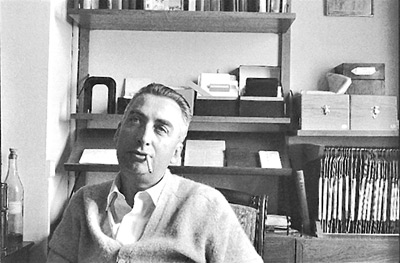
D.H. Lawrence novel, even after death there is no escaping Maman for the French literary critic and theorist, Roland Barthes. 


It has been 30 years since his death in 1980 (dying after being struck by a laundry van, walking home from a luncheon given by future French president, François Mitterrand), but Barthes has most recently published posthumously,
Mourning Diary—A once disembodied journal beginning the day after his mother’s death (documenting the emotional strain that ensued after), now pieced together by his former translator in life, Richard Howard. 


Barthes originally sealed his place in literary society with the essay “The Death of the Author,” essentially dissenting from traditional literary criticisms of his time. It can be summarized with a line taken from his essay referring to the “modern writer,” who is forever doomed to recycle what has already been written, repeating “a gesture forever anterior, never original.”


As if Barthes planned accordingly to disprove his most ardent critics, his most recent work is a testament to that very notion.
Mourning Diary, however, is not dedicated to revering the life he had shared with his mother (in fact it says very little about her), the late Henriette Binger Barthes, but is meant to encapsulate the loss he obsesses over, and never recovers from, years after her death.

It is not an original conceit as many other literary celebrities have long been noted for their notorious, albeit at times dysfunctional, affection toward their mothers (Truman Capote and Albert Camus being among those), but Barthes work reveals a hidden layer that cannot classify him as a typical mama’s boy. Upon her death he remarks he has “lost a daughter” (having cared for her meticulously as she was drying), but afterward he faced a new daunting task, testifying, “Henceforth and forever I am my own mother.”

Perhaps now with the publishing of his intimate agony, before kept secret from friends and contemporaries alike, a new genre might be popularized detailing the not-so-secret veneration between a boy and his mother.

Monday, October 11, 2010

Writing Until the Bitter End: A 30-Year-Feud in the Making


Last week marked only the second time in history a South American author has received the Nobel Prize in Literature.

Peruvian-born writer Mario Vargas Llosa, a onetime presidential candidate, was surprised last Thursday when it was announced he had won, joking, “I have taken all the precautions necessary for them never to give it to me,” in reference to his vigor stance in support of "democracy and the fr
ee market."—a stance that has vexed many in the realm of Peruvian politics.

Colombian native, Gabriel Garcia Marquez (affectionately known as Gabo), was a former friend and confidant of Vargas Llosa, and also was the first Latin American author to win the Nobel Prize in
Literature in 1982. Their longstanding friendship notoriously ended in 1976 after Vargas Llosa punched Garcia Marquez in the left eye at a Mexican cinema (rumors circulated that afterward he said, “That’s for what you did to Patricia.”)

No one knows for certain exactly who-did-what to Patricia (Vargas Llosa’s wife). The scenarios most commonly envisioned involve infidelity on the part of one of the men. It
was a toss up among presupposers as to whether Patricia was a participant (secretly involved with Garcia Marquez) or the two-timed victim of the saga (secretly being warned by Marquez of Vargas Llosa’s infidelity).

Others stand firm it was their ideological differences that drove a wedge. Vargas Llosa was steadily growing towards the political right while Garcia Marquez remained firmly planted in the left. Either way mutual friends have felt the tension and have been subjected to further awkwardness as attempts to reunite the former best friends are continuously foiled.

Both wish not to comment any further on the matter. Vargas Llosa had said in an interview, presumptuously, to let the “historians who deal with us” solve the mystery that has kept the literary world perplexed.

Vargas Llosa is now in his mid 70’s, and Gabo recently c
elebrated his 80th birthday. Prospects have continued to grow bleaker as both men have relocated to opposite ends of the earth. Vargas Llosa is now an adopted citizen of Spain, obtaining citizenship after losing the bid for presidency of Peru to Alberto Fujimori (the only elected president to ever perform a self-coup, only to be followed by a self-exile).

Garcia Marquez, who currently resides in Mexico, has reportedly begun writing again the second installment of his three-part autobiography. A noteworthy action considering the first installment, Living to Tell the Tale, was published back in 2002 and recounts his life up until the year 1955—years before the feud commenced.

The second installment is expected to be revelatory, but when questioned about the significance of the information he will have to impart unto his readers, Gabo’s reply remained nonchalant and unassuming, "I have realized that if I write the second volume, I will have to tell things that I do not want to tell about certain personal relationships that are not at all good."

Monday, October 4, 2010

Amazon’s Unexpected Promiscuity


Recently Amazon has come under fire for the
algorithms used to filter their search engines. If one is to type “homosexuality in books,” Amazon users are provided with A Parent’s Guide to Preventing Homosexuality as the top-ranking book in that category.

As the first book to be advertised, and a controversial one at that, it has unsurprisingly accumulated a large number of reviews. Out of 102 reviewers 46 gave it a five stars rating, marginally beating the one star rating given by 41. Reviewers only slightly deviate between the titles “Sick” and "Sick...” when naming the headline of their posts, but every now and then a title such as, “Excellent book, very informative!” pops up in between.

Amazon has long been an essential platform among book publishers, fostering book sales of a wide array of genres. So an algorithm inflicted with a case of homophobia is a Big Deal. And perhaps that’s why last week, at the Berlin International Literature Festival,
Canadian, Argentine-born author Alberto Manguel labeled “the American publishing industry…one of the worst and most dangerous things that has happened to the works of art and literature.”

So Amazon’s newfound sexual exploration, in the form of “Kindlerotica”, comes as a surprise when juxtaposed to their narrow-minded stance on “homosexual literature”. Last week,
Slate magazine published an article by James Ledbetter—“The Strange but Inevitable Rise of E-reader Pornography”—singling out the unprecedented influence Amazon has had on this genre. Ledbetter observes, “
The Kindle…pushes Amazon over the line from mere enabler of erotica to promoter and producer.”

In fact, Amazon frequently advertises free downloads in an effort to promote new authors. During the month of September,
Compromising Positions was the number one downloaded E-book, (the provided description warns possible downloader’s, “Kama Sutra isn’t for the prudish or faint of heart, and neither is this story”). However, this a relatively better choice in comparison to another featured offer Office Slave, a slightly varying version of erotic fiction except targeted towards a dominantly male audience (also casually classified under the “emotionally uncommitted genre”)—And yes, Office Slave is a self-explanatory title.

Amazon's peddling of free adult-themed literature continues unbeknownst to the their conservative consumer base. Amazon may be trying their hand to cater to their extensively diverse audience, but it won’t be long before someone realizes they're being two-timed.

Monday, September 27, 2010

Kafka's Cat Woes


Franz Kafka stars in his own Kafkaesque story. This time he is the phantom protagonist in an ill-fated legal fight spearheaded by Eva and Ruti Hoffe.

Last week, The New York Times published an article by Elif Batuman (“Kafka’s Last Trial”) documenting her experience in Tel Aviv where the Hoffe sisters continue their two-year custody battle over Kafka’s unpublished manuscripts. Currently it is rumored they are stored in their Tel Aviv flat shared with an “untold number of cats”.

Batuman’s article is the latest coverage to be included detailing the trial regarding Kafka’s lost works.
The Hoffe sisters have caused a literary scandal for attempting to sell the remainder of Kafka’s unpublished works to 
the German Literature Archive in Marbach. Israel claims to control the intellectual property of Kafka after his beneficiary, Max Brod, fled to Israel with a suitcase of Kafka’s manuscripts before the brink of World War II. 


Prior articles published have scrutinized exactly how many cats the Hoffe sisters own (rumors suggest somewhere between 40 to 100). Journalists continue to backhandedly speculate how sane can the Hoffe sisters be to house the lost works of Kafka with a milieu of cats? (“Last week in court, Eva Hoffe’s sweater was covered in animal hairs, possibly originating from a cat or cats,” recounted American writer Avi Steinberg to Batuman.)

Just how the Hoffe sisters came to claim guardianship over the works of one of the most influential writers of the 20th century is a story worthy of Kafka himself. A dying Kafka wrote, “Dearest Max, My last request: Everything I leave behind me [is] to be burned unread.”

Unto which Max then published a few of Kafka's most notable works (“The Trial” and “Amerika”), and in a fit of paranoia imparted the rest to his assistant (rumored to be his lover), who then sold some for a large sum, and finally after succumbing at the ripe age of 101, bequeathed the remainder to her two seventy-something cat-loving daughters. In essence, summing up a long tangled history filled with false promises, legal rebuff, and cat grooming.

The cats seemed to have brought more attention to the handling of Kafka’s texts by highlighting the eccentricity of the elderly sisters’ odd behavior for owning such a large number of cats. Eva Hoffe is regularly referred to by names like “batty old cat lady” by others weighing in on the matter. Even the Israeli National Library is alarmed on the possible affects the cats may have had on the manuscripts.

While approaching the Hoffe’s home, Batuman recounts observing “a large protruding window, enclosed by two layers of metal grillwork, lay an indistinct heap of cats...” Batuman had even taken the time to bring cat toys along for the journey, engaging a kitten with an artificial mouse. At this point, it is possible the cats have taken over the residence of what is left of Kafka’s papers, bringing them no closer to the public’s eager hands.